Soul Medium
As Eshraq gradually renders into our world, it raises a deceptively simple question: Where is it located?
The first encounter I had with Eshraq happened on an island off the west coast of Africa. Surrounded by a horizon of sea nearing abstraction, volcanic cliffs form an atmosphere hovering like a mirage over the world. The link Ali shared seemed to open directly from that space into a parallel climate.
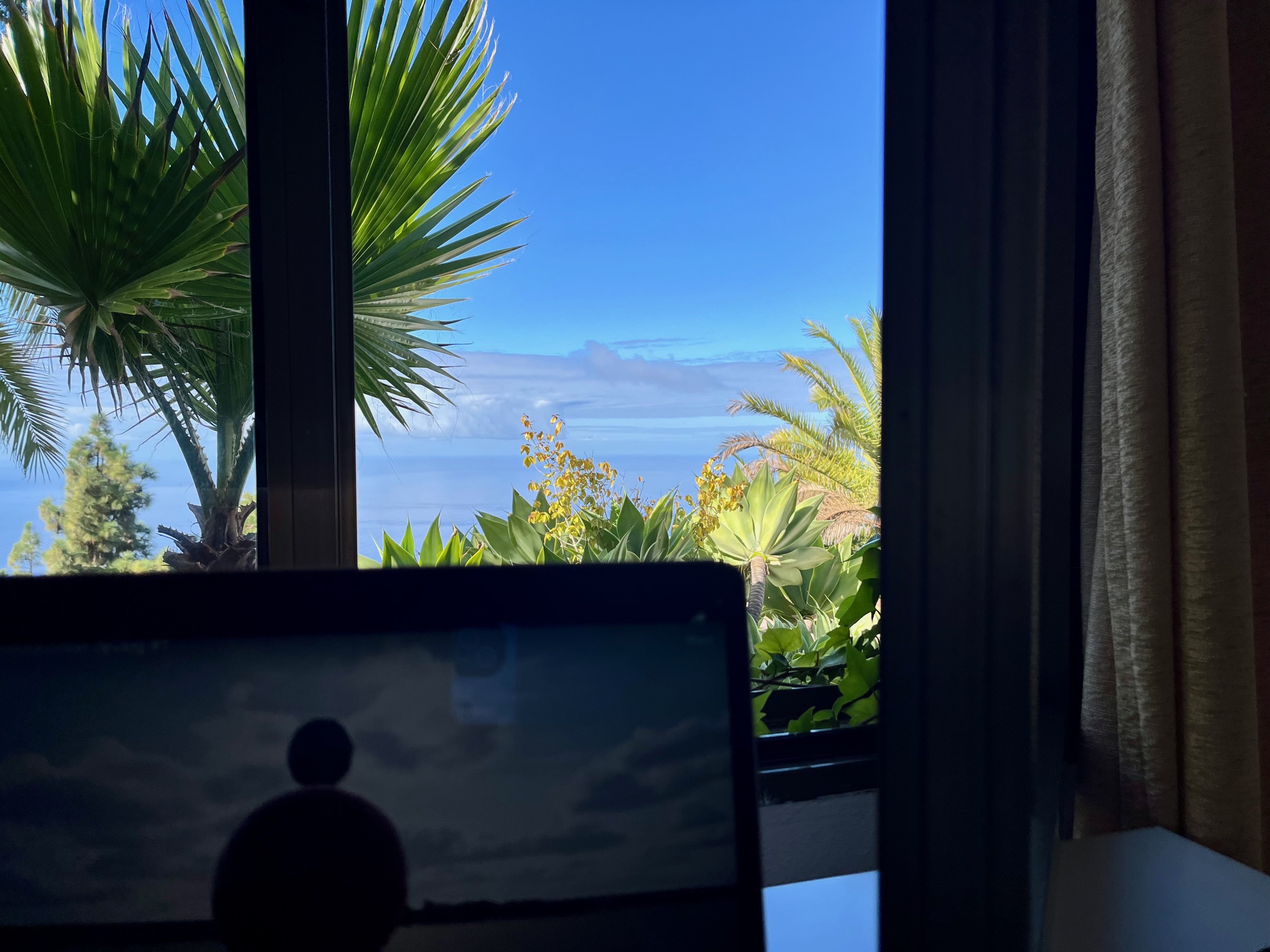
Over time, more and more aspects of Amsterdam started to appear in Eshraq. The virtual desert adjacent to ‘ālam al-mithāl now had bike lanes and canals. And Eshraq also began to infuse the city around it. At first imperceptibly, then as an installation at a nearby bunker.
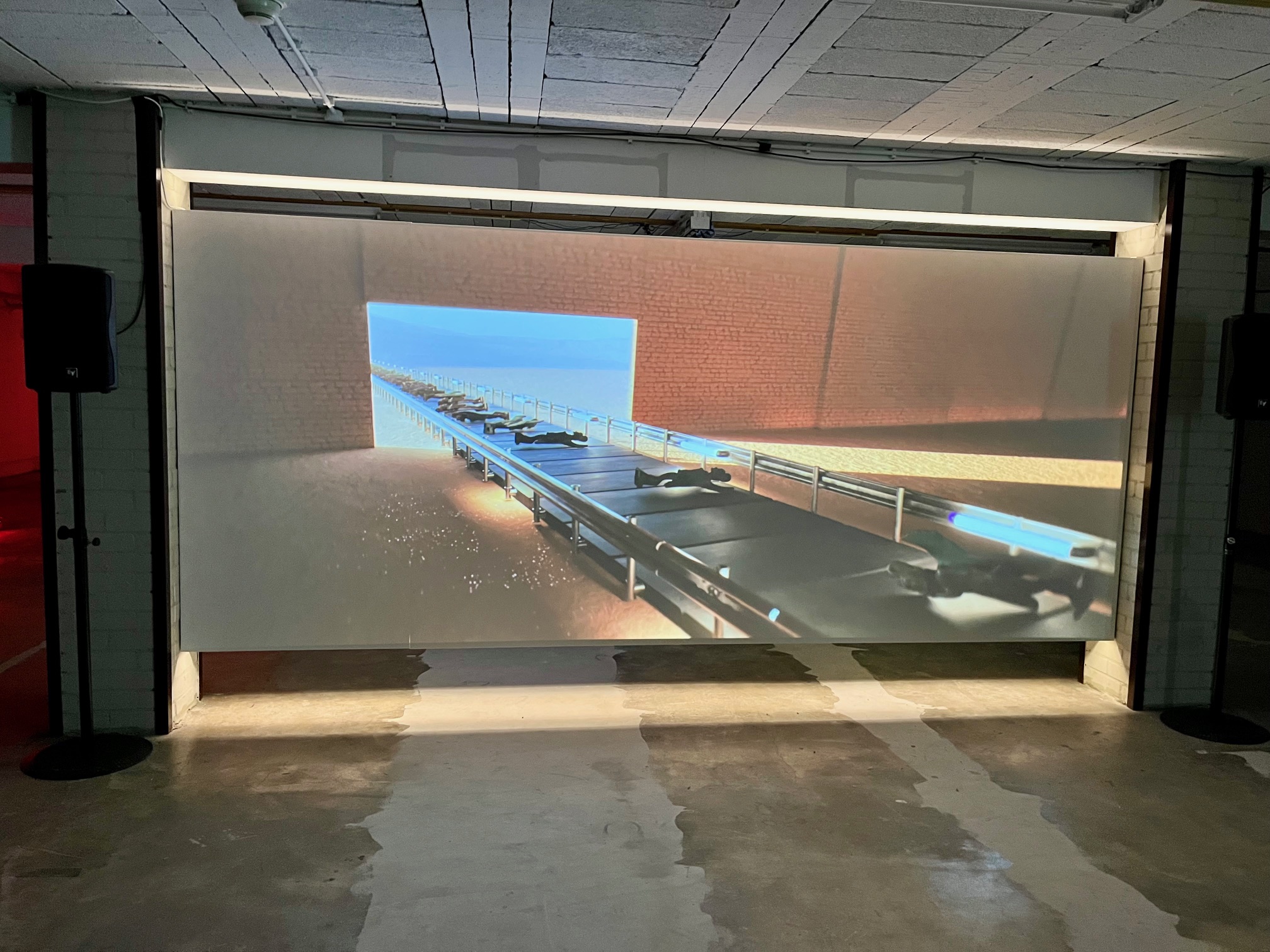
Once again Eshraq seemed almost continuous with the surrounding environment. Yet as Ali explained, it is not site specific. It appears in multiple locations, nodes of overlap between worlds. As if, where Eshraq becomes materialized, it draws the material world toward itself.
Watching Eshraq emerge in these spaces, I saw it becoming a place in its own right. But what kind of place? A ‘no place’ like Suhrawardi’s nā-kojā-ābād? Eshraq is a virtual world, not just in a technological sense, but because it flickers across the boundaries of the real and imaginary.
While it may sound esoteric, this intermediate space is actually very familiar. Humans are all the time immersed in imagistic worlds that are difficult if not impossible to disentangle from their material surroundings. And this sensory ambiguity is only being amplified through digital media.
One of Suhrawardi’s influences, the 3rd-century Greek philosopher Plotinus, described human souls as amphibious. Like frogs or salamanders that transition between water and air throughout their lives, souls live alternately between mundane and transcendent realms.
In a similar way, we could say that humans inhabit a tidal region where the material and immaterial mix. As amphibious beings, our souls move between realities, living in material and imagistic worlds simultaneously. This is how we are able to project ourselves into virtual as well as physical places.
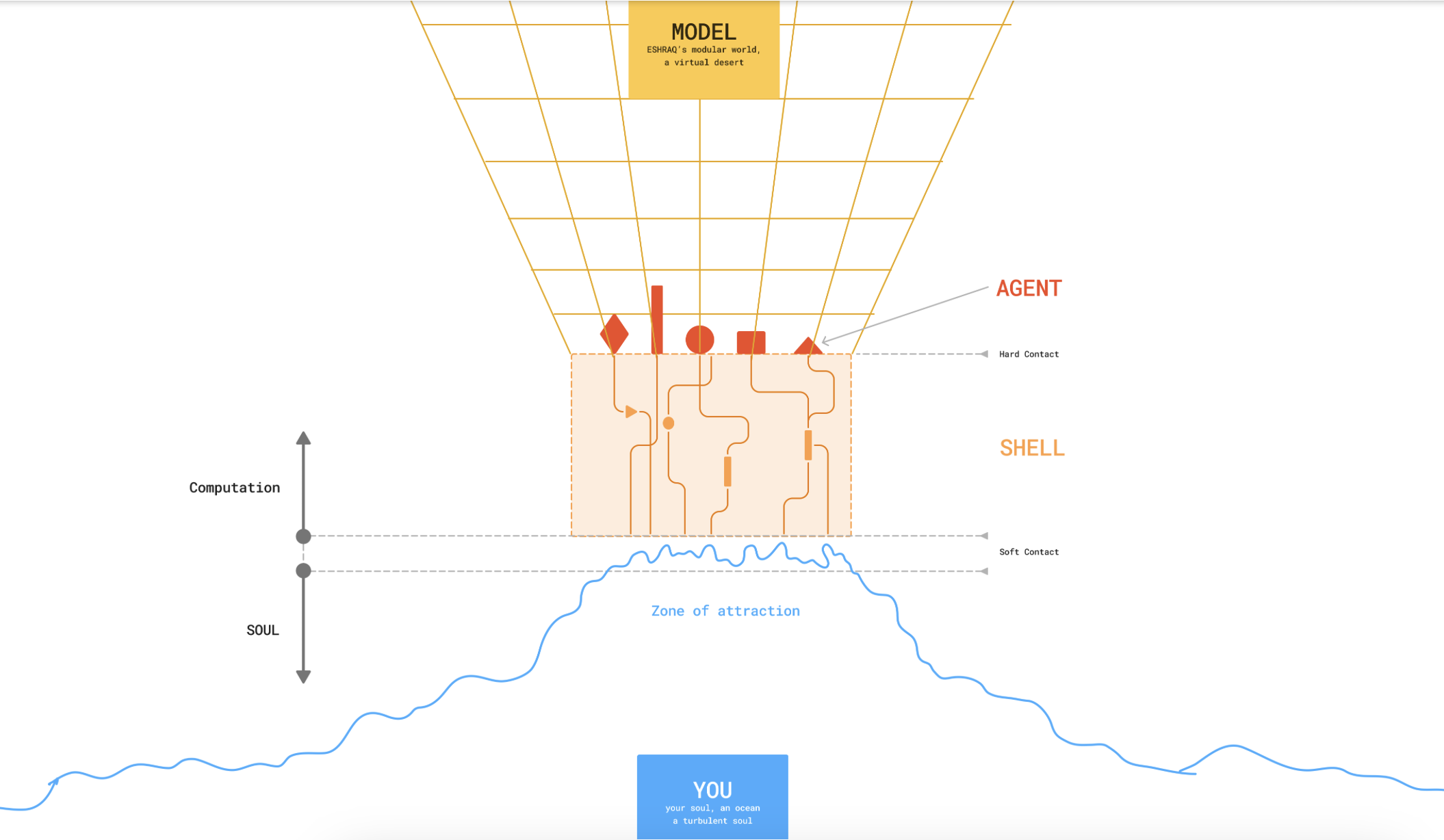
In Eshraq, agents are animated by various souls that arrive from elsewhere. This resonates with Henry Corbin’s description of the angelic encounter: “The Angel is itself the ekstasis” (11). He suggests that angels enter the material world via our souls, even as they immerse us in realms far beyond ourselves.
The soul becomes the place of the angel’s appearance, which Suhrawardi called the eighth climate. It is said the eighth climate exists in an inward space, even though it is not contained within any individual. In this sense, soul could be considered a medium like air, water, light. An elemental medium of the image.
I believe Eshraq exists in this soul medium. If it is located anywhere, it is there. Eshraq appears where an immaterial climate shaped by computation encounters, as Samir Mahmoud writes, “the projective geometry of the soul” (2). Its appearance reveals the presence of this medium in our world.
And from within a materialist culture fascinated by images, it gestures toward a placeless place.
Sources
Henry Corbin, “Mundus Imaginalis or the Imaginary and the Imaginal”
Samir Mahmoud, “‘Alam al-mithal or Mundus Imaginalis”